

Some people who are on long-term ventilation may develop medical and physical complications such as respiratory infections, lung injury, muscle weakness, skin problems, and immobility. To lower risks, it is essential to follow prescribed ventilator settings, monitor patients carefully, prevent infections, support mobility, and take early action.
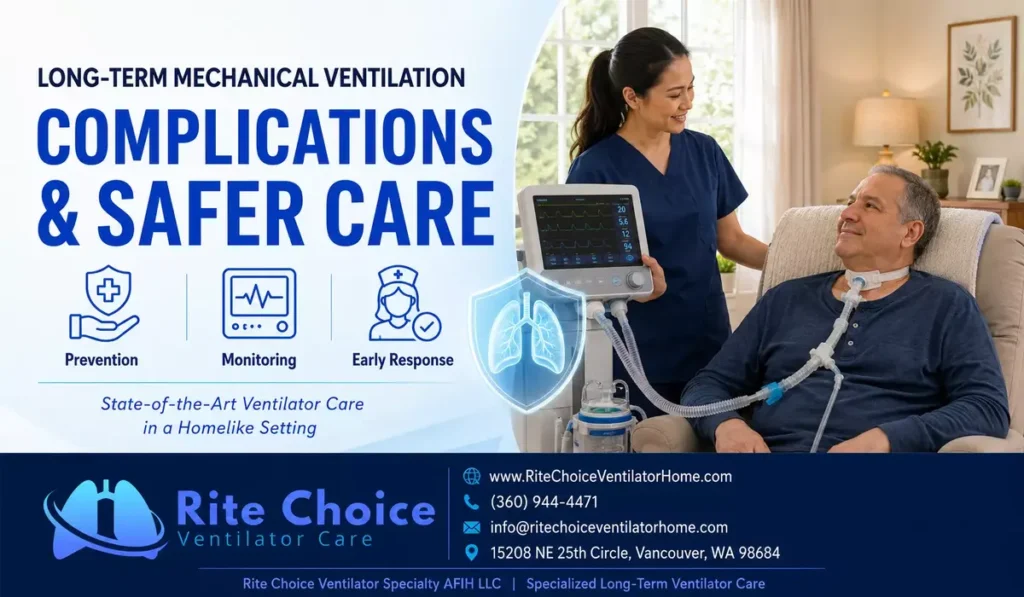
Common Long-Term Mechanical Ventilation Complications
Respiratory Infections and Airway Problems
According to the National Heart, Lung, and Blood Institute, coughing can become difficult, and germs can enter the lungs due to a breathing tube. That’s why Penumonia is considered one of the most common and serious ventilator-related complications.
If secretions are thick, they can block the tracheostomy tube or airway. This can lead to infection and difficult breathing. Common signs include:
- Fever
- Redness
- Swelling
- Discharge around the tracheostomy site
- Breathing Difficulty
- Lower oxygen levels
- Increased/unusual secretions
At Rite Choice Ventilator Home, we regularly monitor oxygen levels, secretions, and the tracheostomy site.
Our team minimizes the risks of infections by following recommended practices, such as:
- Proper hand hygiene
- Humidification
- Equipment cleaning
- Suctioning
- Tracheostomy-care procedures
In case of a suspected infection or airway issue, physicians are notified promptly. The physician assesses the resident and recommends immediate treatment to resolve the issue.
Lung Injury and Ventilator Problems
Lung tissues of ventilator-dependent residents can be injured due to excessive oxygen or pressure. A condition called Pneumothorax can occur when air leaks around the lungs, causing sudden pain, difficulty breathing, and reduced blood oxygen levels.
To avoid this condition, care staff should never change ventilator settings without physician direction.
At Rite Choice Ventilator Home, a personalized care plan including specific ventilator settings is prepared for each resident. Nursing staff strictly follow this plan, check ventilator connections and alarms, and document all changes. In case of any respiratory difficulty, physicians are immediately informed to assess and treat the emergency.
Muscle Weakness, Immobility and Skin Breakdown
Due to long-term ventilation and limited movement, the muscles of limbs, diaphragm, and other body parts become weak. Research on prolonged mechanical ventilation shows that it can reduce physical function and cause diaphragm dysfunction.
If a ventilator-dependent patient stays in one position in the bed for a long time, it can cause pressure injuries and blood clots.
At Rite Choice Ventilator Home, the nursing care plan for each resident includes:
- Regular repositioning of the resident
- Mobility assistance
- Range-of-motion activities
- Nutrition
- Hydration
- Skin checks,
- Coordination with therapists.
The plan reflects the resident’s strength, tolerance, and medical condition.
Emotional and Communication Difficulties
Residents with a tracheostomy face difficulties with speaking. Some residents become emotionally disturbed due to fear, anxiety, isolation, and frustration.
At Rite Choice Ventilator Home, we support the emotional well-being of residents by ensuring:
- Calm communication,
- Familiar daily routines,
- Regular family visits,
- Respect for personal choices.
How Rite Choice Provides Safer Long-Term Ventilator Patient Care
Personalized Ventilator Care Plan
At Rite Choice Ventilator Home, we don’t use one standard care plan for every resident. Instead, we prepare a personalized ventilator care plan for each resident by coordinating with the resident’s physicians, respiratory specialists, nurses, therapists, and family members. This is why our residents face fewer complications.
Continuous Monitoring and Emergency Handling
At Rite Choice, we ensure continuous monitoring of each resident. This helps with prevention, early recognition, and timely treatment in case of any issue.
For residents’ and staff’s safety, we also maintain:
- Backup power,
- Respiratory supplies,
- Working alarms,
- Clear emergency procedures.
Our emergency-preparedness guide explains these safeguards in more detail.
Handling Complications Promptly and Effectively
If a complication develops, our nursing staff addresses the situation within their scope and informs the physicians promptly. The instructions given by the physicians are then implemented immediately to resolve the complication.
If the resident needs a higher level of treatment, we arrange emergency transfer.
Looking For Specialized Long-term Ventilator Care in Vancouver, WA?
Families looking for specialized long-term ventilator care in Vancouver, Washington, can review our ventilator care services or call (360) 944-4471 to discuss their loved one’s needs.