
Why Emergency Preparedness Matters in Ventilator Care
It is very important to prepare a strong emergency plan to protect and support ventilator-dependent residents in long-term ventilator care facilities. A resident who is ventilator-dependent can become seriously ill if even a short power failure occurs. That’s why a strong emergency plan is essential to protect breathing support and keep residents calm and peaceful during an emergency.
A good emergency plan should cover:
- Power Outages
- Fire
- Evacuation
- Severe Weather
- Supply Interruptions
- Unexpected Equipment Failure
Reliable Backup Power
One of the most important safeguards is reliable backup power. Ventilator batteries and generators should always be kept ready and fully maintained.
Backup Respiratory Equipment
The following equipment should be kept available for each resident according to their care plan:
- Respiratory Equipment
- Suction Equipment
- Medicines
- Tracheostomy supplies
- Food
- Water
- Oxygen
Our guide to long-term ventilator care services explains how continuous monitoring and coordinated respiratory support contribute to resident safety.
Staff Preparation and Training
Proper training and preparation of staff is equally important to handle emergencies in a long-term care facility. The role of each member must be properly defined, and every member should know what to do and who to contact during an emergency. They should know how to follow the resident’s current medical orders. Important information for each resident, such as ventilator settings, physician contacts, medicines, and transfer needs, should be easily accessible. These details are also essential parts of a personalized nursing care plan for long-term mechanical ventilation.
Emergency Preparedness Planning Rules for Long-term Ventilator Care Facilities
The Centers for Medicare & Medicaid Services clearly states that emergency planning, training, testing, communication, and policies are key elements of emergency preparedness.
The complete emergency planning resources for long-term ventilator care facilities are provided by Washington State DSHS.
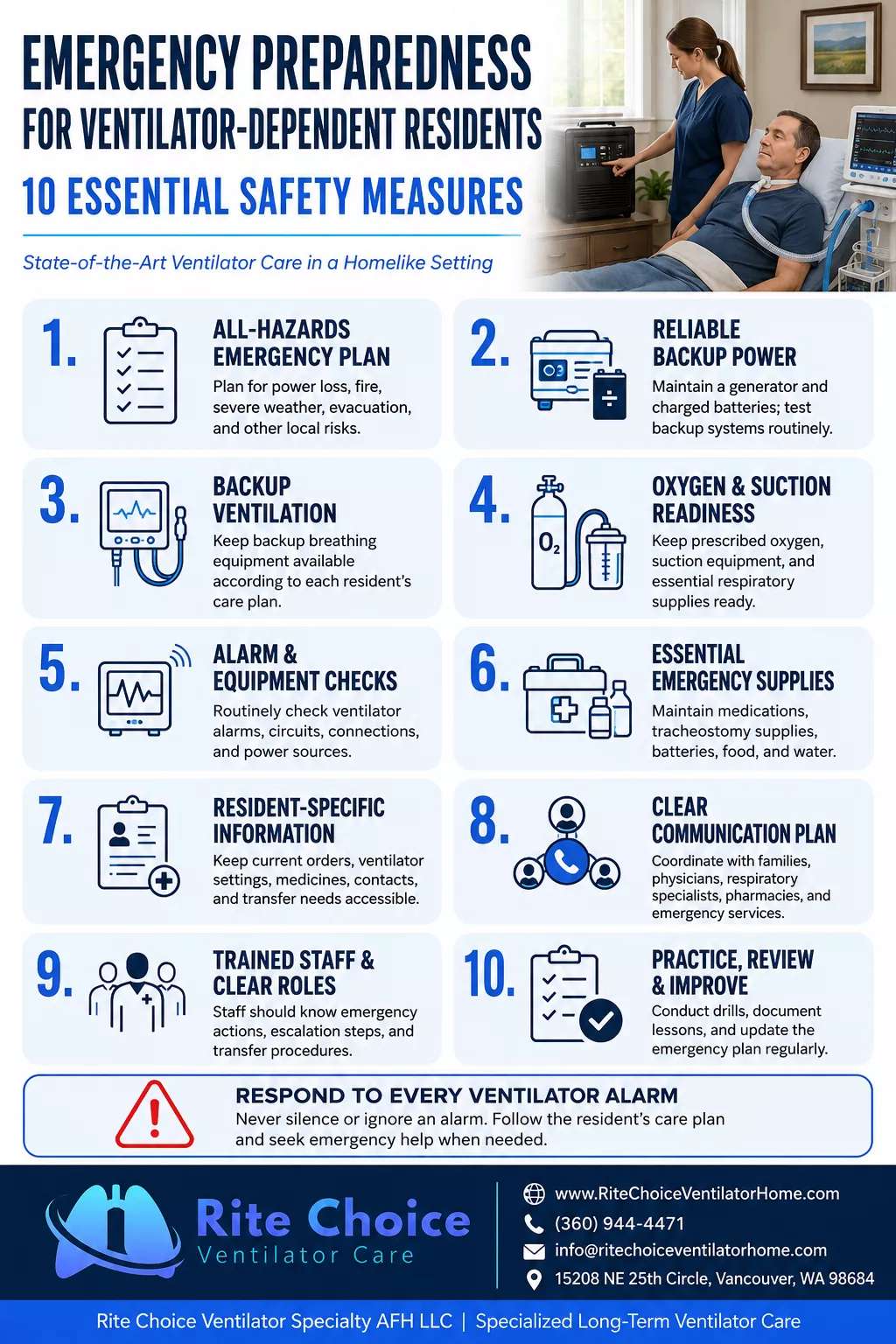
Infographic Showing 10 Safety Measures
The following infographic shows the 10 practical safety measures that should be reviewed by families and care providers. It is not a substitute for a resident-specific emergency plan. The safety plan for each resident is prepared considering their medical needs, equipment they need, and the risks affecting the local area.