

Mechanical Ventilator Weaning Guide Based on Current Best Practices 2026
If any of your loved ones is on long-term mechanical ventilation, then you must be thinking, when will they be weaned and be able to breathe on their own again? The answer to this question is different for every ventilator-dependent patient. The time to stay on a ventilator may range from a few days to a few months or even longer. In 2026, we have safer, modern, and personalized weaning methods available.
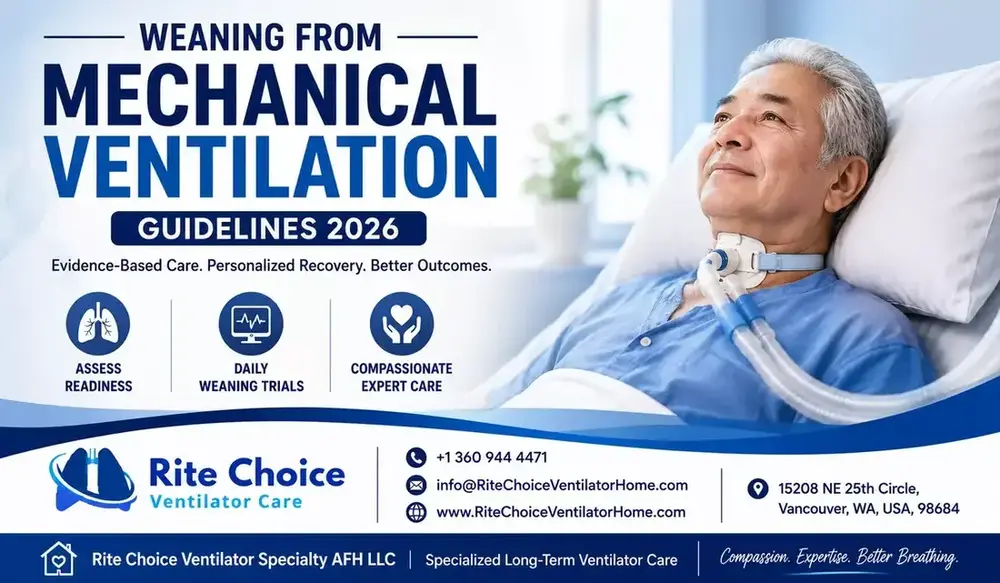
At Rite Choice Ventilator Specialty AFH LLC, we prepare a personalized weaning plan for each resident. The weaning plan is based on factors like the strength of the patient, underlying medical condition, and recovery progress. The weaning plan is prepared through close collaboration of therapists, physicians, nurses, and family members to ensure safe weaning.
What Does Ventilator Weaning Mean?
Mechanical Ventilator weaning is a step-by-step and gradual process to reduce the mechanical breathing support until a patient can breathe completely on their own or with much less help.
The goal of weaning is to remove the breathing assistance at the right time, not as quickly as possible. It is worth mentioning that weaning before the right time can lead to respiratory failure. Similarly, unnecessarily long waiting (not weaning) can cause weakness of respiratory muscles and delay in recovery.
In 2026, according to Sage Journals, it is recommended to evaluate the eligible patient daily to check whether they are fully ready for the weaning process or not.
How Do Doctors Know When a Patient Is Ready For Weaning?
Before starting a weaning trial of a patient, the physician looks for many positive signs, which are mentioned below:
Stable Medical Condition
The main medical illness of the patient should be improving. For example, a patient after surgery should be recovering well, and a pneumonia patient should be responding well to medicines and treatment.
Good Oxygen Levels
If a ventilator patient is maintaining healthy blood oxygen levels without the need for very high ventilator settings, then it is a positive sign.
Strong Breathing Effort
The patient should be able to produce enough breathing effort to quit the ventilator support. The strength of respiratory muscles is important to consider.
Stable Heart and Blood Pressure
If the patient is maintaining their blood pressure and heart rate without any significant support, then it is another good sign.
What Happens During the Ventilator Weaning Process?
Weaning from mechanical ventilation is done in small steps that are carefully monitored.
Spontaneous Breathing Trial (SBT)
Usually, the weaning process starts with a test called SBT. During this procedure, the ventilator settings are adjusted to provide minimal breathing assistance for 30-120 minutes. During this period, the patient is closely monitored for their:
- Oxygen levels
- Breathing
- Heart rate
- Signs of fatigue
- Comfort
If this trial is tolerated well by the patient, then the medical team proceeds to the next steps.
Why Do Some Patients Need More Time To Wean From a Ventilator?
Some patients may need a longer time to wean from the mechanical ventilator. This is because of the complexity of their medical condition.
For example, the patient may be recovering slowly due to the following conditions:
- Heart Issues
- Anxiety
- Nutritional Deficiencies
- Infections
- Excessive secretions through the airways
- Severe lung disease
- Weakness of Breathing Muscles due to a long stay in the ICU
A patient with the above conditions may need a slower and more individualized approach to wean off the ventilator.
- Checkout: Rite Choice Tracheostomy Care Guide
How Modern Ventilator Weaning Practices Improve Success?
The recent weaning guidelines recommend assessing each ventilator patient daily. Daily care checklist includes:
Daily Readiness Checks
The healthcare team checks every patient daily to evaluate whether they are ready for another weaning attempt or not.
Careful Sedation Management
It is recommended to minimize unnecessary sedation. This helps to keep the patient active and awake enough to take part in breathing trials.
Simple Exercises & Physical Therapy
To strengthen the muscles, especially breathing muscles, physical therapy, simple exercises, and sitting up are recommended.
Individualized Care and Weaning Plans
The personalized ventilator care plan and personalized weaning plan for each patient are important because no two patients have the same medical problems and physical strength.
How Families Can Help in the Weaning Process?
Family members’ support plays a vital role in the fast recovery and weaning process of ventilator-dependent patients.
Family members and friends can support their loved ones by:
- Helping reduce anxiety and stress
- Inquiring about the patient’s health daily
- Taking part in the care planning meetings with healthcare providers
- Offering encouragement and reassurance to the patient
- Understanding and following infection prevention practices
It is observed that a supportive and calm environment keeps the patient confident during the weaning trials.
How Rite Choice Supports Safe Ventilator Weaning
At Rite Choice Ventilator Specialty AFH LLC, we know that weaning from a mechanical ventilator is a very important and emotional journey for the patient and their family. Our team observes each patient closely, provides a personalized weaning plan, and works closely with the respiratory therapist and the patient’s physician.
We follow the latest evidence-based weaning practices and ensure that each patient can live a healthy life after weaning from mechanical ventilation.
Discuss Your Loved One’s Ventilator Care Needs
Every patient needs a safe, personalized plan for ventilator support and weaning.
Speak with the team at Rite Choice Ventilator Specialty AFH LLC to learn how we provide compassionate, long-term care. Call Us: +1 (360) 944-4471 or contact us online.