

Patients who are on long-term ventilator support don’t just need a ventilator for breathing support. They also require a completely customized nursing care plan for their overall physical and emotional well-being. The customized nursing plan should address various care aspects like nutrition, communication, breathing, overall comfort, mobility, and emotional health.
Every patient on a ventilator has different and unique needs depending upon their underlying medical and emotional conditions. That’s why a good nursing personalized care plan for ventilator patients starts with understanding the unique needs of the patient and then providing consistent support.
At Rite Choice Ventilator Specialty AFH LLC, we work closely with physicians, therapists, and family members to prepare a personalized care plan for each ventilator-dependent patient.
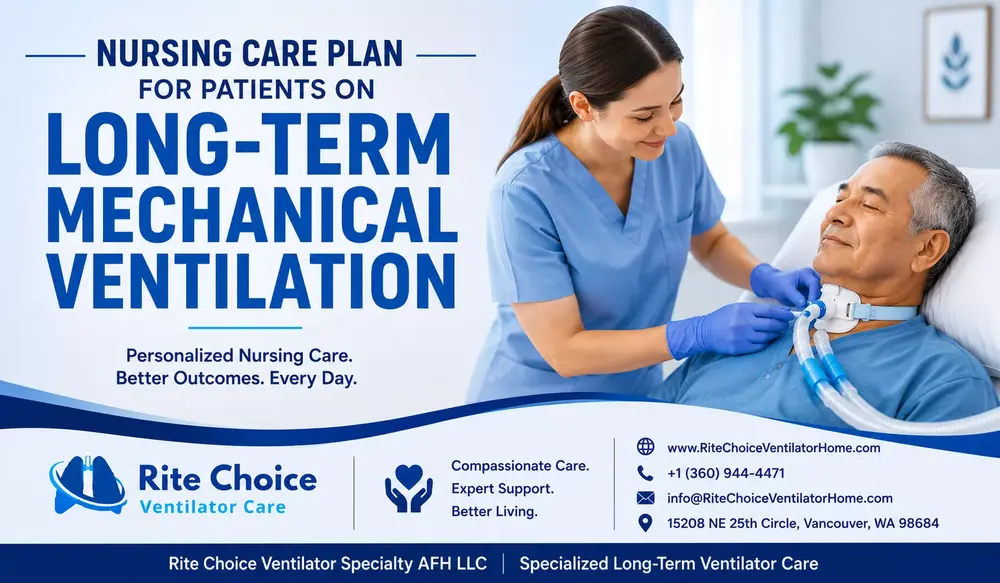
What Is a Nursing Care Plan for a Ventilator-Dependent Patient?
A nursing care plan is a structured and well-defined approach that manages the daily healthcare needs of a ventilator-dependent patient.
A nursing plan includes:
- Assessment of the patient’s condition (physical and emotional)
- Identifying the main problems
- Setting appropriate daily and long-term goals
- Providing daily care consistently
- Monitoring and recording progress
A good nursing plan for patients on long-term ventilation includes:
- Breathing Care
- Tracheostomy Care
- Nutritional Care
- Skin Care
- Mobility Care
- Emotional Support
- Infection Prevention
It is also important to review the nursing plan regularly and change it according to the changing needs of the ventilator patient.
- Checkout: Mechanical Ventilator Weaning Guide 2026
Key Areas of a Long-Term Ventilator Nursing Care Plan
1- Respiratory Assessment and Ventilator Monitoring
The core objective of a ventilator patient nursing plan is to provide optimal respiratory support.
It is very important to:
- Observe the breathing pattern of the patient
- Observe the overall respiratory condition
- Monitor oxygen saturation
- Watch for signs of difficult breathing
Pay Attention to Ventilator Alarms
It is the responsibility of nurses to pay special attention to ventilator alarms, properly investigate them, and follow all emergency preparedness rules. If there is any change in the patient’s oxygen or respiratory requirements, it must be reported immediately.
2- Airway and Tracheostomy Care
If a ventilator-dependent patient is breathing through a tracheostomy, then proper daily tracheostomy care & maintenance are needed to maintain a clear airway and minimize complications.
A proper tracheostomy nursing care plan must include:
- Regularly checking the tracheostomy site on the patient’s neck
- Checking and managing secretions
- Performing Suctioning when needed
- Checking and managing any swelling, redness, bleeding, infection, or unusual secretions
- Following best humidification practices
3- Infection Prevention
Long-term ventilator patients are prone to respiratory infections if proper ventilator care is not provided. That’s why infection prevention is one of the main goals of a ventilator care nursing plan.
Some important infection prevention and management tips include:
- Ensuring Proper hand hygiene
- Using properly sterilized respiratory equipment
Nurses must closely monitor the possible signs of infection, such as:
- Fever
- Breathing Becoming Worse
- Changes in the quantity, color, and smell of secretions
- Redness or swelling
- Pus formation or increased bleeding at the trach site
4- Nutrition and Hydration
To support fast healing, strength, and overall recovery of the ventilator patient, good nutrition is very important. The nutrition requirements of each patient are different depending on their age, weight, and medical condition. Nurses should follow the personalized nutrition and hydration plan for each patient.
It is important to note that some patients require tube feeding or modified diets, while others can eat normally. The nursing staff must take proper care while feeding the patient to avoid the risk of aspiration.
5- Skin Care and Mobility
The ventilator care nursing plan includes proper skin care and mobility for patients to minimize the risks of muscle weakness and pressure injuries.
Nursing Skin care and mobility plan for ventilator patients includes:
- Regular repositioning of the patient
- Assessing the skin of the patient regularly, reporting and addressing any infections
- Doing pressure relief measures
- Providing mobility support when needed
- Giving physical therapy
- Providing occupational therapy (Occupational therapy (OT) builds the essential skills needed for daily independence, such as dressing, eating, bathing, and writing.)
Supporting Comfort and Emotional Well-Being
Patients who are on long-term ventilation often face emotional issues like anxiety, isolation, frustration, or fear.
A good emotional care nursing plan for ventilator patients includes:
- Listening to the concerns of the patient
- Encouraging communication
- Involving family to provide emotional support (regular visits, arranging parties, etc)
- Understanding the individual needs and preferences of patients
- Adopting alternative ways to communicate with patients who cannot speak due to a tracheostomy
Looking for Specialized Long-Term Ventilator Care?
Rite Choice Ventilator Specialty AFH LLC provides personalized nursing support for ventilator-dependent patients in a comfortable, home-like environment. Learn how our team can support your loved one’s long-term care needs. Call us at +1 (360) 944-4471 or contact us online.